
LAD #39: Brown V. Board of Education

This case marks the beginning of the civil rights movements of the late 1950s to even present day. In Brown v. Board the supreme court unanimously ruled that schools can no longer be racially segregated. This contradicted the previous ruling of 1896, in the case of Plessy v. Ferguson, that stated all publicly funded buildings could be separate but equal. This previous case had been deemed ineffective because all to often these separated facilities were not equal, with facilities that were dedicated to African Americans being significantly lower quality. This case was brought up originally because of Linda Brown, a girl barred from an all white school, and only given access to black schools which did not provide an equal education. Her defendants cited the 14th amendment, stressing that the State could not deny any person the equal right to protection of the laws, specifically the equal treatment under those laws which Linda Brown was not receiving. The Kansas District Court acknowledged the poor situation, yet upheld the former ruling of Plessy v. Ferguson. However, once Brown appealed, the supreme court sided differently. It had multiple cases coming forward about equal education opportunities and addressed them all with the Brown v. Board ruling, stating that segregated schools are inherently unequal, and therefore must be de-segregated. While this case did not accomplish all that would eventually be done, it laid a solid framework for decades of change to come.

Brown v Board:
Image result for Brown v Board:

MLK's March on Washington for Equal Rights:
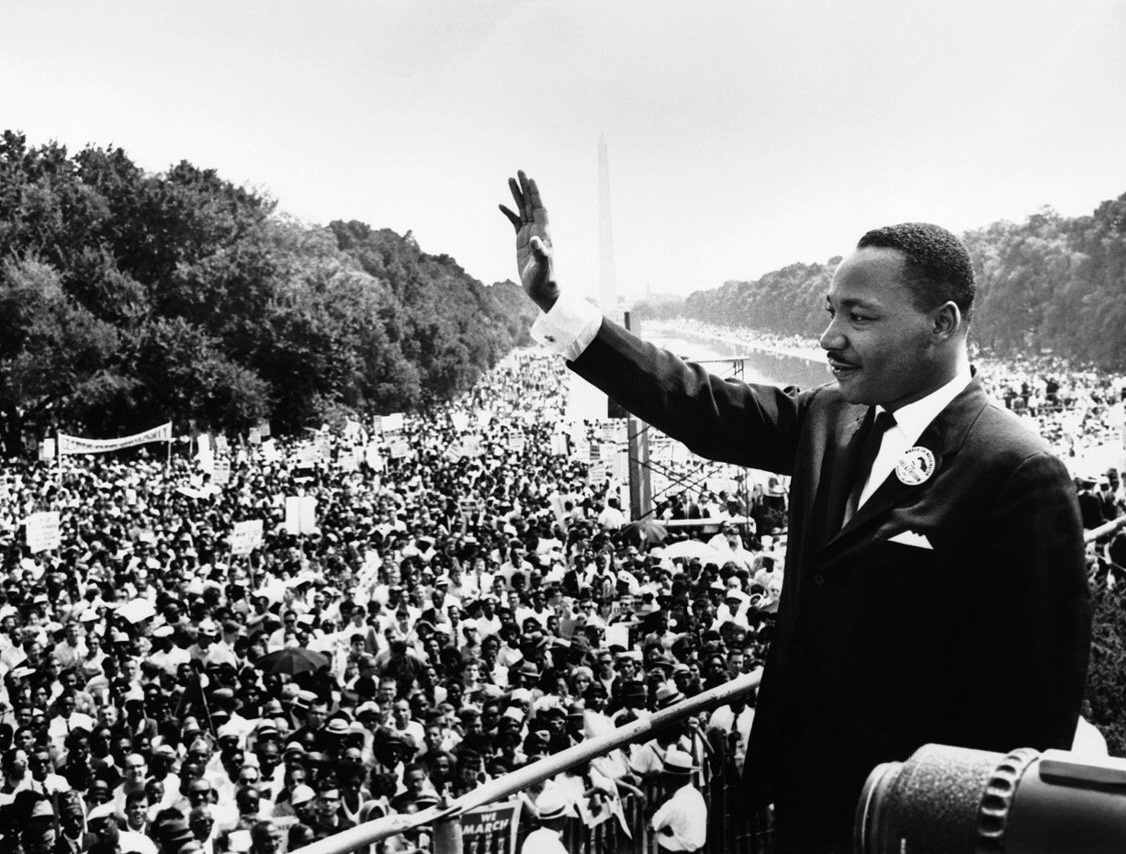
Image result for mlk march on washington speech

Comments

Popular posts from this blog

LAD/Blog #35: Home was a Horse Stall

Executive order 9066 was essentially a racist program that excluded Japanese Americans from everyday life in America due to the actions of their former nation. They were banned from the west coast and forced into internment camps where they essentially lived under oppressive, racist marshal law. This was especially painful for first generation immigrants as they had a personal connection with both nations. Many of them did not want to see their two home nations fighting, and held some allegiance to both, but most were more prone to defending the United States.This was also hard on Japanese children, as they were ripped away from their friends, lives, and schools and taken to internment camps. One example of this is Sox, and her difficult upbringing during this time. She is taken away from her home and placed in a new one. That home is a horse stall. This stall was in a small, crowded internment camp which Sox was forced to grow up in. Her experience illustrates how poorly the Japanese ...

LAD/Blog #28: Keating-Owen Child Labor Act

The primary purpose of The Keating-Own Child Labor Act of 1916 , "To prevent interstate commerce in the products of child labor, and for other purposes." This act disallows the conduction of distribution, or commerce of products that were manufactured using child labor.   The qualification for child labor is that thirty days prior to the commerce of the product, a child under the age of 16 worked for long hours. Additionally, the Attorney General, the Secretary of Commerce, and the Secretary of Labor will form a committee that will create regulations to enforce and strengthen the act. Furthermore, officials will be continuously monitoring offices, mills, and factories to help oversee a proper workplace. Also, the state and attorney general to present all available evidence when quarries or mills or any such industry is being inspected. If child labor is discovered, there will be fines, jail sentences, and procedures for conviction. Another main point of emphasis is properly ...

LAD/Blog #18: Sojouner Truth's "Ain't I a Woman" speech

Sojourner Truth's speech "Ain't I A Woman" was a call to action for women around the United States to strive for equality in all aspects of life, stating "It is now up to us to turn this world right side up". She attacked the difference between African american and white women saying, "even though I'm a woman, nobody has ever treated me like a white woman". She mentioned that nobody had ever helped her into a carriage or over a mud pile, and that the same was true for every other African American woman. She also attacked the argument that men were entitled to greater rights than women because god was a man, by saying that women must've helped create god then. She calls on all women, but specifically African american women, to fight for equal rights in all aspects of their lives. Sojourner Truth: Malala fights for equality for middle eastern women in education: