
LAD #37: FDR’s Executive Order 9066

On February 19th, 1942, FDR proposed executive order 9066, the order that gave the Secretary of War the ability to create designated areas for specific people to stay during wartime that could pose a threat to the US military. In WWII these areas became known as internment camps, and the people put in them were Japanese-American citizens. This allowed for the rampant mistreatment of these people with cramped living conditions and improper education. While FDR did say these areas were to be provided adequate food, shelter, and transportation, the word "adequate" is very subjective, and allowed for very poor conditions. One example of this is the story "Home was a Horse Stall", where a young girl, Sox, and her family were forced to live in a horse stall and had very little rights and no access to programs many citizens would such as a good education. I, personally, think this is a horribly executed order. While it was FDR's intention to avoid the influence of spies on the American population, this was not the only thing accomplished. It was used as a facade to accomplish racist agendas towards the Japanese by putting them in camps with little support or basic amenities. It unfairly punished and exerted control over American citizens based off of little evidence of any allegiance to a foreign state. 
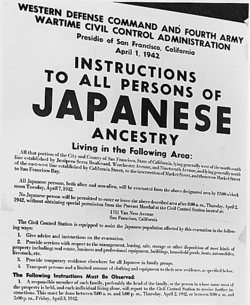
Executive Order 9066:
Image result for Executive Order 9066:

Concentration Camps:
Image result for concentration camps

Comments

Popular posts from this blog

LAD/Blog #35: Home was a Horse Stall

Executive order 9066 was essentially a racist program that excluded Japanese Americans from everyday life in America due to the actions of their former nation. They were banned from the west coast and forced into internment camps where they essentially lived under oppressive, racist marshal law. This was especially painful for first generation immigrants as they had a personal connection with both nations. Many of them did not want to see their two home nations fighting, and held some allegiance to both, but most were more prone to defending the United States.This was also hard on Japanese children, as they were ripped away from their friends, lives, and schools and taken to internment camps. One example of this is Sox, and her difficult upbringing during this time. She is taken away from her home and placed in a new one. That home is a horse stall. This stall was in a small, crowded internment camp which Sox was forced to grow up in. Her experience illustrates how poorly the Japanese ...

LAD/Blog #33: Kellogg-Briand Peace Pact

The Kellogg-Briand Peace Pact, otherwise known as the Pact of Paris for the city in which it was signed, was a pact outlawing war for acts other than self defense. It was originally signed by 15 nations, and 47 more quickly followed suit. This meant that war was outlawed between the 62 largest nations in the world at the time. This meant that if all those nations held their word another world war would be nearly impossible. However, not all these nations held their word. This was evident in the Mukden Incident of 1931. Japan had been hit hard by the world's economic depression, and they felt that by imperializing they would have access to larger markets and more resources than their island could provide. This began by overtaking Manchuria in the Mukden incident. Once they began this military expansionism many nations were afraid to take action in case they would be provoking war that was not an action of self defense. This highlighted the fact that the only way to enforce this trea...